Public Presentation Tips: 7 Ideas You Can Use Before Your Next Presentation
Public presentation tips: what makes a presentation truly effective? In this article, we’ll share 7 practical tips you can apply to your very next presentation. You’ll get to know the core principles of Storylining, Storytelling, Slide Writing, PowerPoint Essentials, and Presenting, and discover the professional skills behind every successful presentation.
Most articles about public presentation tips promise quick tricks, simple hacks, and advice you can use instantly. And there's certainly a place for that. If you have a presentation tomorrow, you'll welcome any idea that helps you stand before an audience with more confidence. However, it's important to clarify one thing.
Successful presentations rarely hinge on a single clever move. Just as weaker presentations aren't undone by one or two slip-ups. The real difference usually lies in how consciously the speaker structures their message, how well they understand their audience, and how authentically they represent their topic.
👉 Pitch Deck – The Presentation That Became a Business Model
The good news is that the principles behind professional presentation skills can often be framed as simple tips. The following seven ideas can help you in your very next talk. And if you present regularly, it's worth exploring the system behind them.
The tips are the start, but mastery is the goal. If you're ready to become a truly professional presenter, we're here to guide you. With 15 years of experience training senior executives and their teams, we help leaders communicate with confidence and authority.
👉 Contact us to learn more about our advanced presentation training.
Tip #1: Don't Start with Slide One
Most presentations go off the rails because PowerPoint is opened too soon. Many people start thinking right on the first slide. They write a title. They search for images. They draw boxes. But a presentation doesn't start on a slide.
Before you create a single slide, grab a piece of paper and a pen. Write down your most important messages — even on separate sticky notes or index cards. Arrange them in order and try to determine which idea follows from the last. What's the first question the audience will ask? The second? The third?
If you want to present a problem, the SCQA model — which deduces the solution from the Situation, Complication, and key Question — is a useful starting point. If you want to support a decision or back up a proposal, the Pyramid Principle can be one of the most powerful thinking frameworks. Only then should you turn to PowerPoint.
Pitch Experts calls this skill Storylining. It's the logical backbone of your presentation. A great presentation isn't born on the slides. It's born in your thinking.
Tip #2: Replace Abstract Concepts with Real Examples
One of the most common mistakes experts make is thinking almost exclusively in abstract concepts. Strategy. Efficiency. Digitalization. Innovation. Risk mitigation. These are important terms. The problem is, audiences don't experience concepts — they experience situations.
That's why it's worth finding a concrete example for every important claim. A client situation. A project. A practical problem. A scenario the audience can picture. It could be a true story or even a fictional one. The point isn't documentary-level accuracy. It's to highlight a real-world problem. A good example isn't for show — it's a tool for thinking. The Pitch Experts Storytelling module is built on this. It's not about entertainment, but about creating human connection points alongside your arguments.
Tip #3: Read Every Slide Through the Eyes of a Newcomer
Every expert carries a unique risk: their own knowledge. The more deeply we understand a topic, the harder it is to imagine what it's like not to understand it. But the audience is often in exactly that position.
That's why, after creating each slide, it’s worth asking a simple question: "Would I understand this if I were encountering this topic for the first time?" If the answer isn't a clear "yes," it's time to keep working. A good presentation doesn't demonstrate the speaker's knowledge. A good presentation helps the audience understand something. The Slidewriting skill is about exactly that. It's not about copywriting. It's about supporting comprehension.

Tip #4: Remove One Thing from Every Slide
Most slides are weak not because they have too little information, but because they have too much. Too much text. Too many charts. Too many ideas. Too many messages.
Before your next presentation, try a simple exercise. From every single slide, take something away. A sentence. A graphic. A data point. An explanation. Surprisingly, you'll often find that the slide didn't get weaker, but stronger. Focus is often born not from addition, but from subtraction. One of the secrets of professional presentations is that they respect the audience's attention.
Tip #5: Learn the Tool Before the Deadline
Many people try to learn the software while building the presentation. That’s like running a marathon but learning how to tie your shoes along the way. Using presentation software is a fundamental business skill today. You don't need to know every feature. You don't have to be a graphic designer. You don't need to become a PowerPoint guru.
But it’s crucial that the technology doesn't hinder your thinking. The Pitch Experts PowerPoint Essentials module serves this exact purpose. It helps you confidently use the tools you need for your daily presentation work. In the best presentations, the software becomes almost invisible. Because the focus isn't on the tool, but on the message.
Need a PowerPoint presentation that truly makes an impact? Our partners have raised over €275 million in capital with the decks we've designed.
👉 Explore our use cases to see the results!

Master Template
A11

PowerPoint Master Template
GovRadar

Master Template
Mazars

Playbook
ZUCKER.
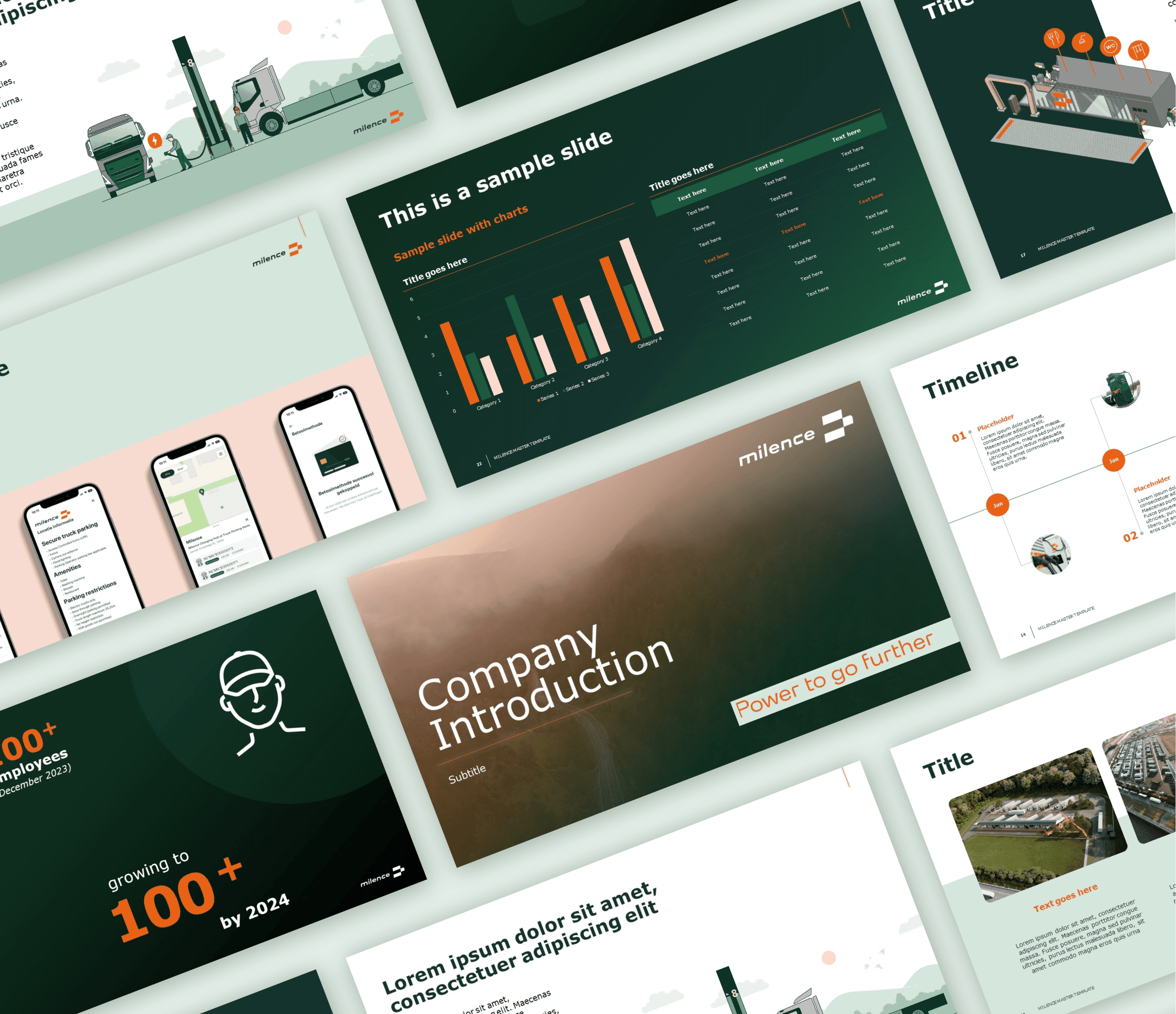
Storytelling & Animations
Milence
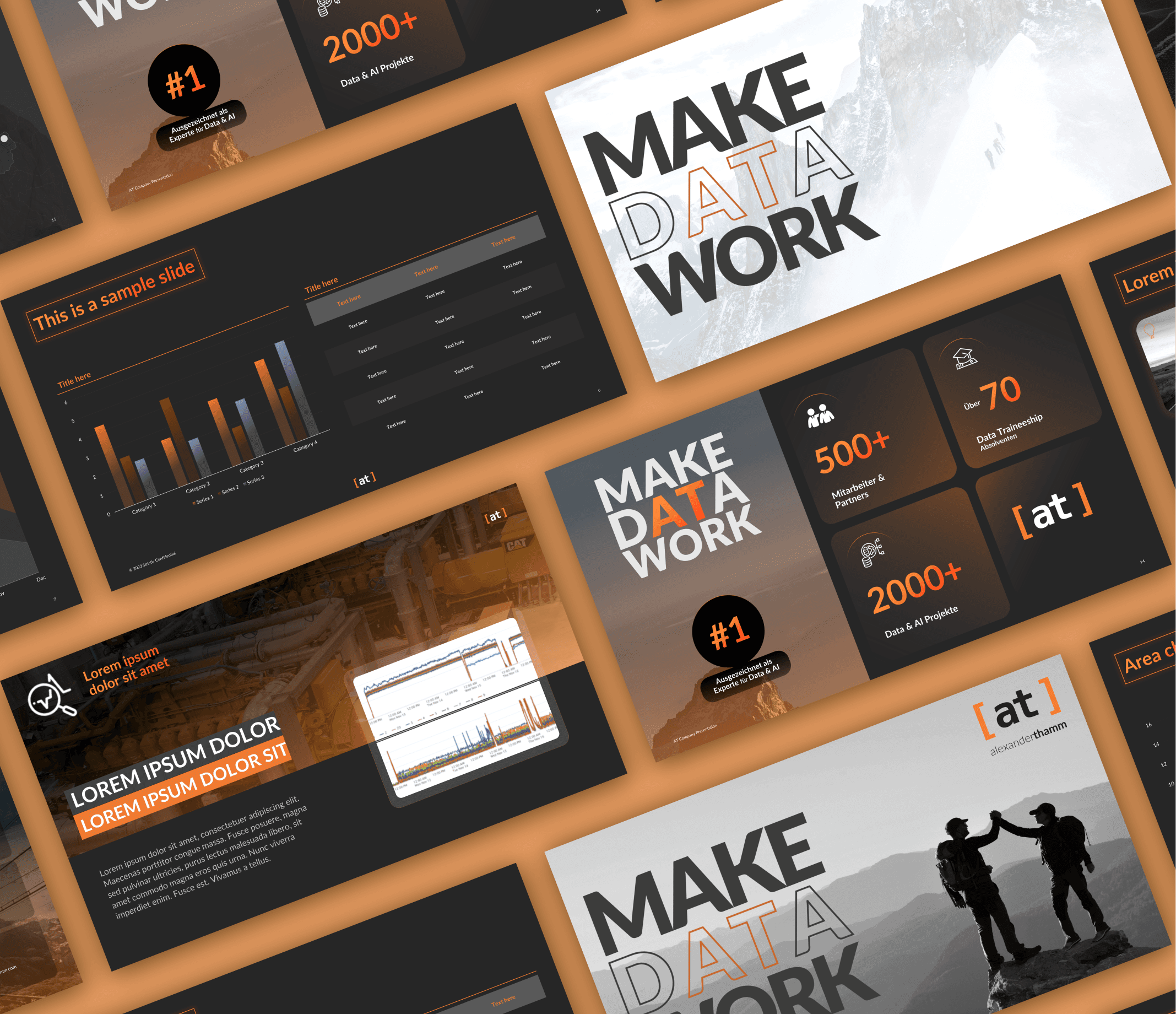
Master Template
Alexander Thamm
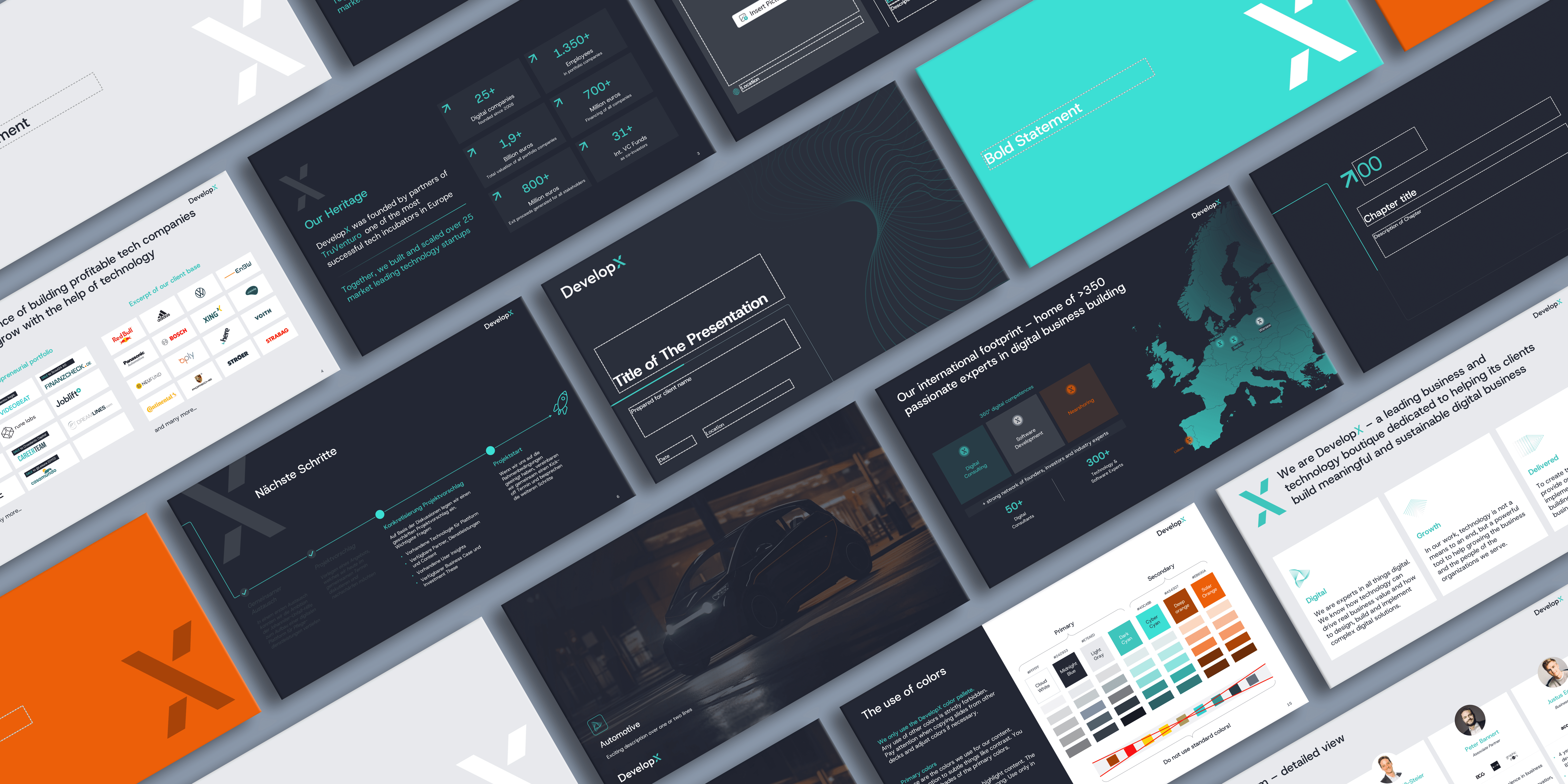
PowerPoint Master Template + Company Presentation
DevelopX

Master Template, Storytelling
Genioo

Investor Deck
Airtime
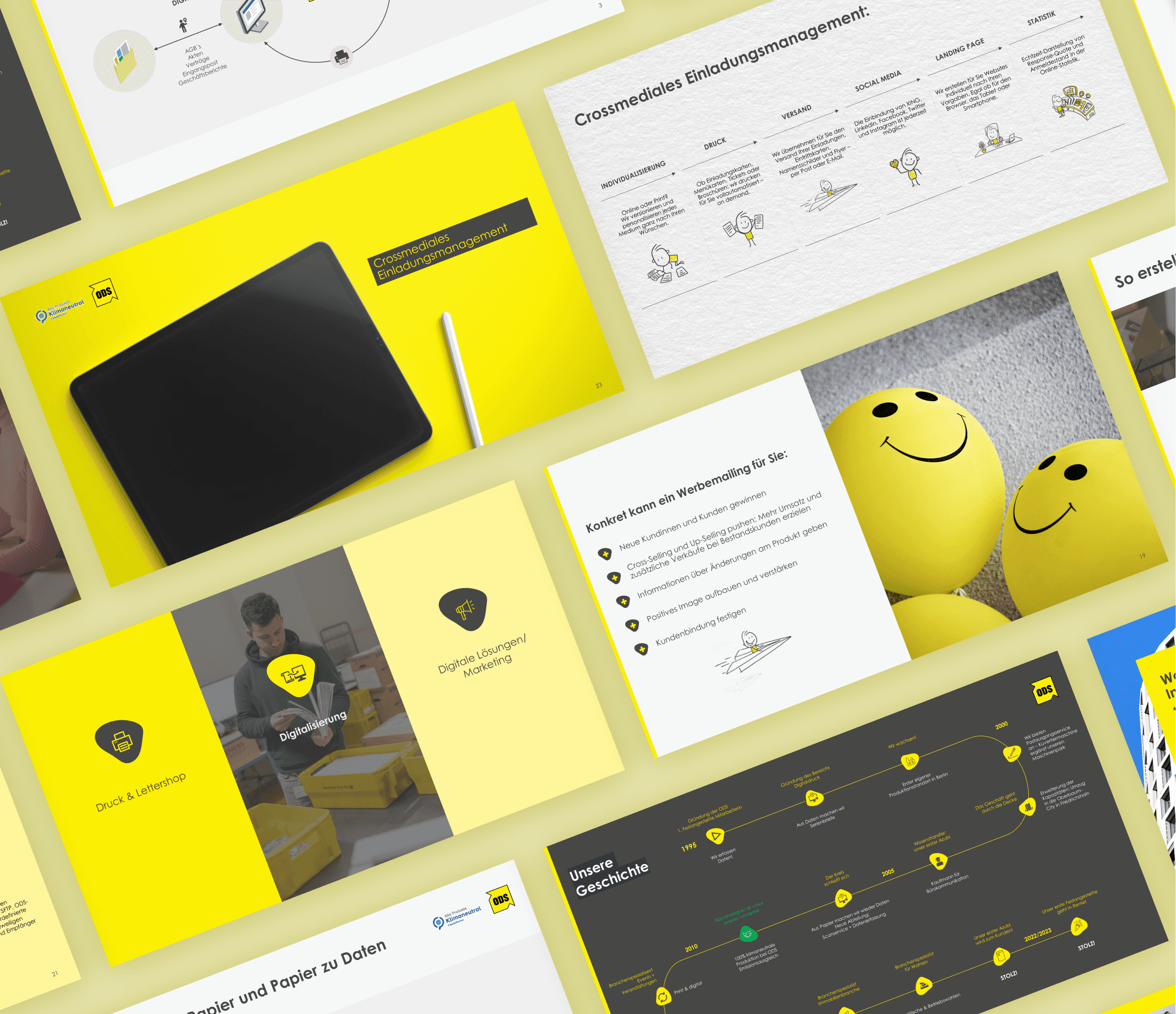
Storytelling & Playbook
Office-Data-Service
Tip #6: Don't Memorize Sentences, Memorize Transitions
Many speakers try to memorize their speech sentence by sentence. This usually causes more problems than it solves. When one sentence is forgotten, the entire train of thought can falter or collapse.
Experienced speakers work differently. They don't learn sentences they learn transitions. They know how one idea leads to the next. They know why one slide follows another. They know the logic of the story. This gives them far more freedom and, paradoxically, results in a much more natural stage presence. The audience isn't hearing a recited script. They're witnessing thinking, live.
Tip #7: Focus on the Audience, Not on Yourself
One of the most common causes of stage fright is self-focus. What are they thinking of me? Can they see I'm nervous? Did I say that right? Did I mess up? Your attention keeps returning to yourself.
Interestingly, the situation often changes the moment your focus shifts. You stop focusing on yourself and start focusing on the audience. You want to help them, to make them understand something. You want to convey an idea. In that moment, the presentation is no longer about you—it's about the connection. One of the key insights of the Presenting module is that an authentic performance isn't acting. It's not about building charisma. It's about attention. Attention to the topic, to the audience, and to the situation.
These Are Not Just Public Presentation Tips
The seven pieces of advice above can help you in your very next presentation. However, it's worth seeing that these aren't isolated tricks. Behind each one lies a greater skill.
Storylining.
Storytelling.
Slidewriting.
PowerPoint Essentials.
Presenting.
Professional speakers are effective not because they know more tricks, but because they understand the principles these tips are built on. Therefore, public presentation tips aren't the end of the journey. They are the beginning. The point where you realize that behind successful presentations, there is no magic. There is a learnable, developable, and time-tested body of professional knowledge.
👉 Presentation Techniques Training - How to Own the Room

From Tips to Mastery: The Pitch Experts Approach
Professional speakers are effective not because they know more tricks, but because they understand the principles these tips are built on. Therefore, public presentation tips aren't the end of the journey. They are the beginning. The point where you realize that behind successful presentations, there is no magic. There is a learnable, developable, and time-tested body of professional knowledge.
At Pitch Experts, we’ve built our entire approach on delivering this professional knowledge through three core services:
Presentation Training
We build these skills from the ground up with comprehensive training programs for teams. We offer flexible learning options, including interactive online modules and in-person workshops delivered directly at your office.
👉 Discover our training modules
Presentation Agency
For when you need a flawless presentation delivered, our agency steps in. We design and build everything from high-stakes investor pitch decks to internal company playbooks, either from scratch or by transforming your existing materials.
👉 Our presentation agency service
PowerPoint Templates
Need a professional-looking deck right now? Our instantly downloadable templates provide a polished, ready-to-use foundation, perfect for when you need to move fast without sacrificing quality.
👉 Download our presentation templates
The tips are the start, but mastery is the goal. If you're ready to become a truly professional presenter, we're here to guide you. With 15 years of experience training senior executives and their teams, we help leaders communicate with confidence and authority.
You might also be interested in these articles:
👉 Pitch Deck Design Agency: design that closes the gap
👉 Airbnb Pitch Deck – From Air Mattress to Global Brand
👉 The Uber Pitch Deck: Lessons from the Startup Wild West
👉 How to Make a Pitch Deck: The 3-Dimensional Method of Professional Agencies
👉 Playbook 2026: How to Build a Modern Business Playbook
👉 Why You Need Presentation Training
👉 The Public Speaking Coach: Your Partner in Business Thinking
👉 Rhetorical Question: The Question That Needs No Answer
👉 Real Presentation Techniques – Why Great Presenters Are More Than Just "Good Speakers"