Presentation Techniques: Why Presentation Became a Profession
Presentation techniques: why has presenting become a distinct profession, and what techniques actually help a message reach an audience? Together, Storylining, Storytelling, Slidewriting, PowerPoint Essentials, and Presenting are not just a collection of tricks. They form the modern toolkit for credible communication.
Stepping in Front of an Audience
For most people, a presentation isn’t a simple act of communication. It's a defining personal experience. It’s a moment we often remember for years, or even decades. Nearly everyone has felt that tension before public speaking. The racing heartbeat. The uncertainty. The looming question: will I succeed?
This is no accident. Speaking in front of others, making yourself visible, articulating arguments, and representing a viewpoint to a group is more than just a professional task. It’s a uniquely human situation, even in an anthropological sense. Since the dawn of human history, there have been moments when someone had to stand before the group and convince them of something. Everyone feels this moment in their body: the faster pulse, the tension, and the responsibility that comes with speaking up. For a moment, it feels like the weight of every eye is on you.
The modern presentation is a continuation of this ancient scenario. Perhaps that’s why nearly every important presentation ends with the same question.
“So, how did it go?”
Most people answer with:
“I think it went well.”
Or:
“I don’t know, it could have been better.
The truly professional answer, however, is quite different:
“I delivered my message.”
This simple sentence already contains the two most crucial elements of a presentation. There was a message. And there was a method. This is the method we now know as presentation techniques. At the dawn of civilization, it was called rhetoric. But the goal has never changed: to help an idea travel from one person's mind to another's.
👉 Rhetorical Question: The Question That Needs No Answer
If a Presentation Were Just a Speech, It Wouldn't Be a Profession
Interestingly, for a very long time, presenting wasn't considered a standalone competency. There were good speakers and not-so-good speakers. There were charismatic leaders and dull experts. Most people, however, viewed public speaking as a kind of innate ability. You either had a knack for it, or you didn’t.
The corporate world experienced a similar situation for a long time. You could say that presentations were in their "wild west" era. Everyone created their materials in their own way. Everyone structured their narrative according to their own logic. Some presentations were excellent, others less so, but no one saw it as a distinct profession. Then, the world changed.

Knowledge, innovation, and technology began to play an increasingly larger role in how companies operated. Expertise was no longer just integrated into organizations; in many cases, knowledge itself began to create organizations. This is especially visible in the world of startups. A great idea, a new technology, an innovative service, an expert team. And just like that, a business is born.
👉 The legendary Uber pitch deck
👉 The legendary Airbnb pitch deck
In this new environment, communication became the prerequisite for the social and business application of knowledge. It’s not enough to be good; you have to be understandable. It’s not enough to be innovative; you have to be able to show the significance of that innovation. It's not enough to have a great product, you have to show why it matters. Consequently, the importance of presentations grew continuously. Public speaking became less and less the privilege of politicians, leaders, and institutions. Today, hundreds of millions of engineers, consultants, project managers, salespeople, developers, and experts present every single day. This is how presenting evolved into a profession.
👉 The Public Speaking Coach: Your Partner in Business Thinking
Want to take your and your team's presentation skills to the next level? For over a decade, we've helped companies deliver their messages with impact. With our support, our clients have secured over €275 million in funding.
👉 Contact us for a no-obligation consultation and find out how you can achieve your goals.
👉 Our Training Modules
👉 Details on Our Presentation Training
Why Did PowerPoint Agencies Emerge?
The next realization is perhaps even more interesting. When companies recognized the importance of presentations, they also faced another problem. Most experts are not communication professionals. An engineer’s job isn’t to create presentations. A CFO’s role isn’t to edit slides. Why would a researcher be a master of visual communication? Yet, they all have to present regularly.
As a result, the same problems appeared in organizations over and over again. Creating presentations took up a disproportionate amount of time. The corporate identity was compromised. The quality of presentations varied significantly. The most critical business messages often got lost in the details. Companies increasingly realized that developing their presentation culture was a matter of competitiveness. Training, therefore, became a business necessity.
It was in this environment that PowerPoint and Pitch Deck Design Agencies emerged. Not because companies didn't know how to use PowerPoint, but because presenting had become its own profession, and presentation techniques had become a methodology. Behind a good presentation, there isn’t just technology. There's rhetoric, dramaturgy, visual communication, a consultant's mindset, and a coaching approach. This is how a presentation training program comes together.
👉 Why You Need to Work with a Pitch Deck Design Agency Today

Master Template
A11

PowerPoint Master Template
GovRadar

Master Template
Mazars

Playbook
ZUCKER.
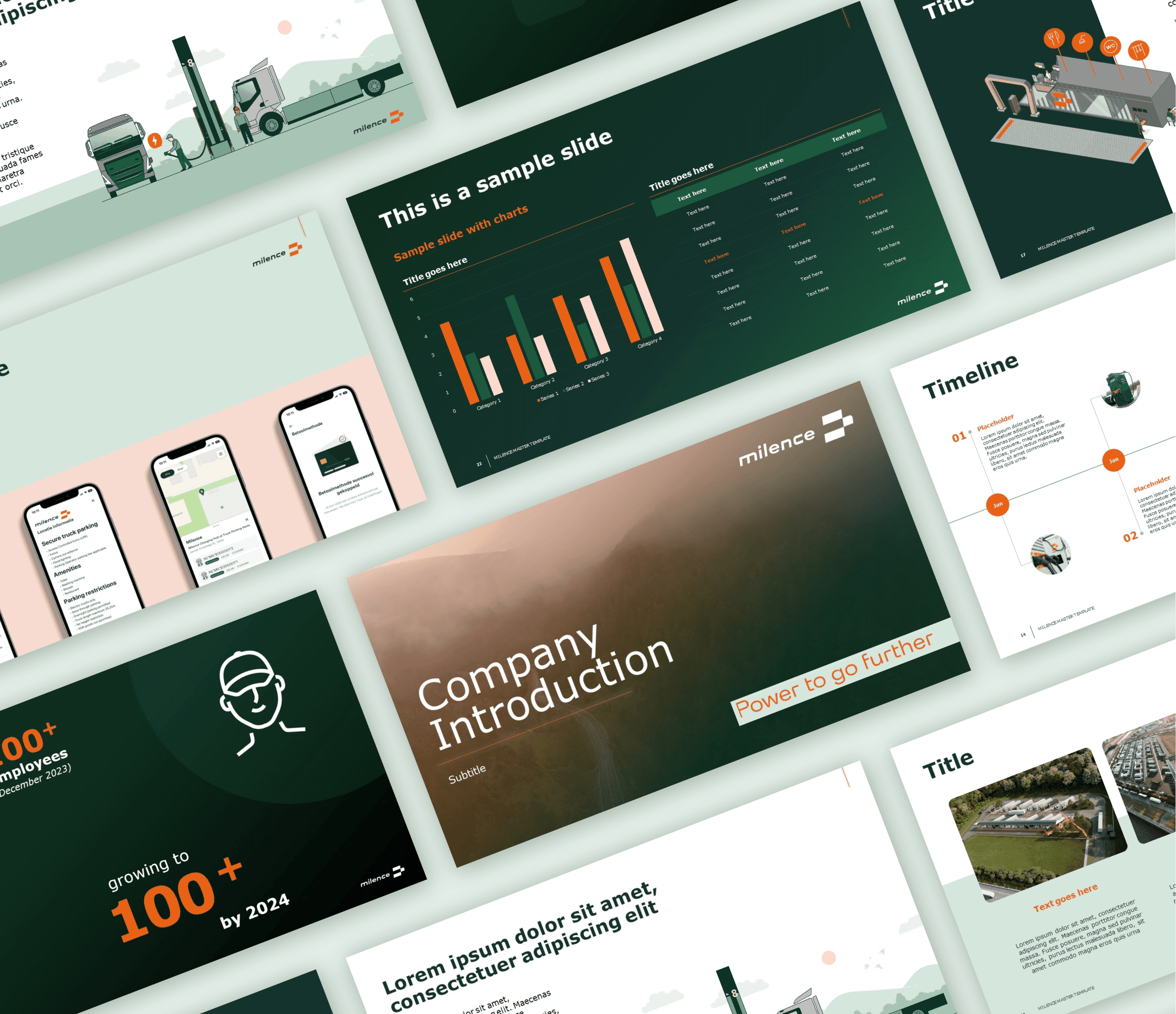
Storytelling & Animations
Milence
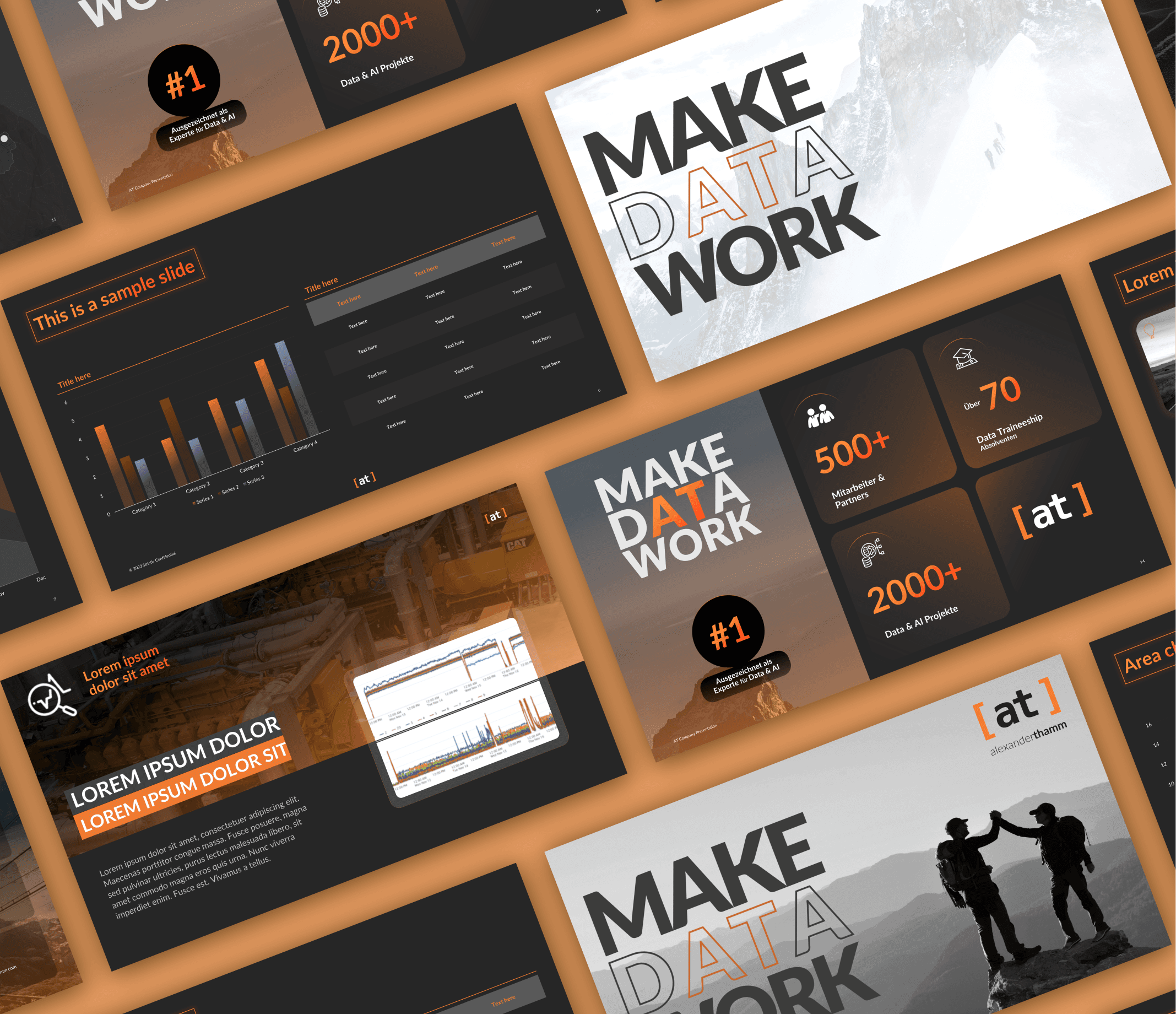
Master Template
Alexander Thamm
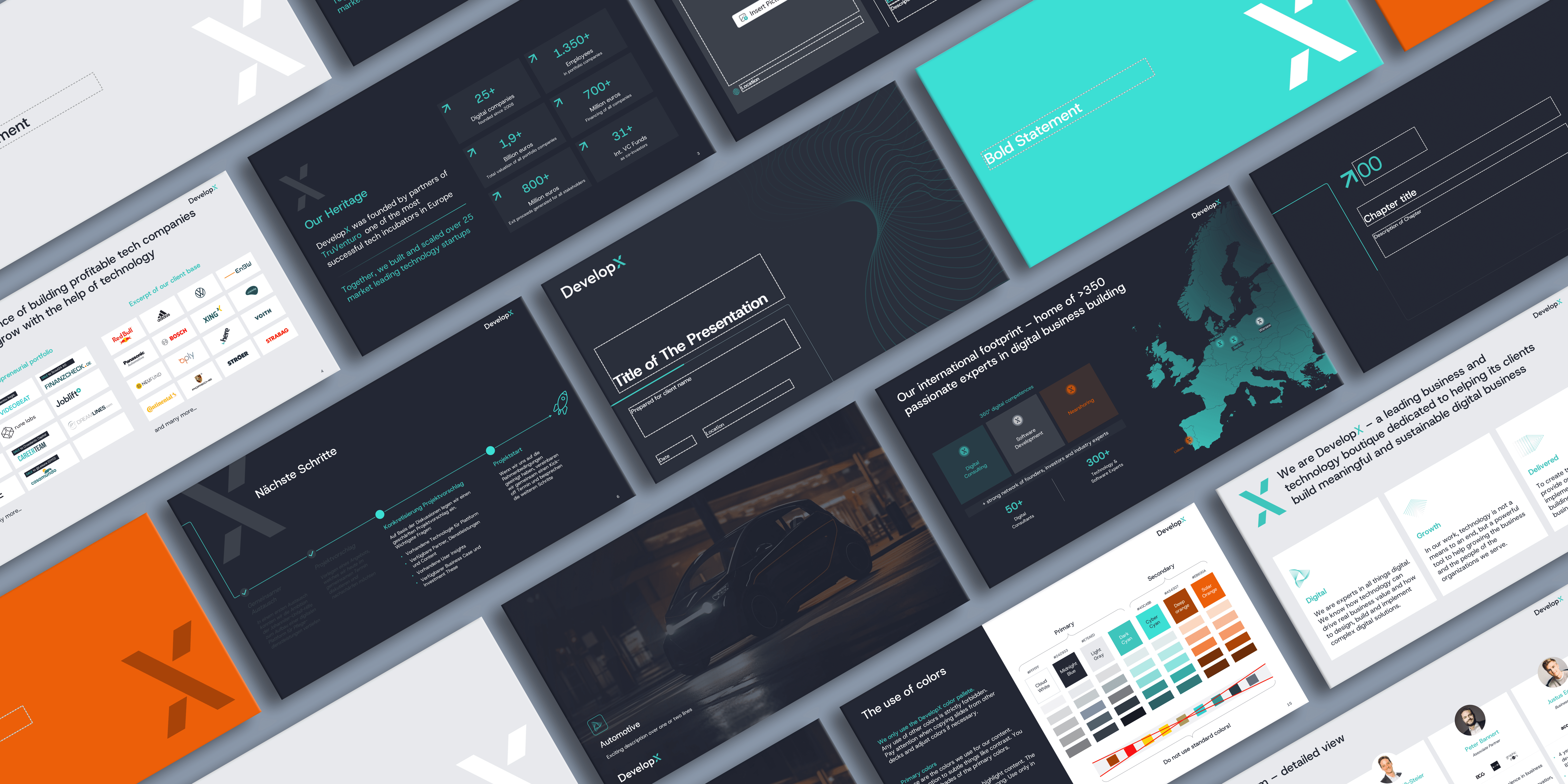
PowerPoint Master Template + Company Presentation
DevelopX

Master Template, Storytelling
Genioo

Investor Deck
Airtime

Storytelling & Playbook
Office-Data-Service
What Really Are Presentation Techniques?
The term presentation techniques is often misunderstood. Many think of it as a collection of random tips. How do you maintain eye contact? What images should you use? How should you stand on stage? These are important questions, of course, but presentation techniques mean much more. It actually describes a complex system where every element serves a distinct function while working towards a common goal. And that goal is nothing less than building credibility.
Storylining – Establishing a Logical Foundation
People are constantly interpreting the world around them. The audience does the same during a presentation. They don't just listen to what the presenter is saying; they also check if they understand it. If a basic understanding doesn't form, they will naturally start to distance themselves from the topic as a self-defense mechanism. Storylining is therefore not a simple editing technique. It's the tool for creating a logical foundation. It helps decide what the main message is. What belongs to it, and what doesn’t. How ideas connect and in what order they should be presented. Good Storylining doesn’t simplify complexity; it makes it manageable.
Storytelling – Creating a Human Connection
Many view Storytelling as a communication innovation. In reality, its power comes from its alignment with how humans operate. People are not just logical beings; they are also narrative beings. They organize the world into stories, seeking connections, context, and meaning. That is why Storytelling isn't a tool for entertainment. It doesn’t exist to make a presentation more interesting. It exists to create a narrative connection alongside logical arguments. This is why we often remember certain presentations years later. Not the slides. Not the charts. But the realization we experienced.

Slidewriting – When Text Helps You Think
Presentation text is a unique genre. It’s not a brochure, a study, or a marketing piece. The audience doesn’t read it; they listen to it. Therefore, the primary function of presentation text isn’t aesthetic pleasure but supporting comprehension. Good Slidewriting is clear, precise, and consistent. It aids the argument. It doesn’t distract attention but focuses it. A good slide isn’t good because it’s beautiful, but because it helps you think.
👉 Slidewriting – The Toughest Discipline in Any Presentation
PowerPoint Essentials – Taming the Technology
Presentation software is now a part of everyday business operations. Yet, in many organizations, the competence needed to use it is distributed very unevenly. The goal of PowerPoint Essentials is not to turn every participant into a technical expert. Rather, it’s to build confidence in day-to-day presentation work. A leader needs a different level of knowledge than a project manager or an expert who regularly creates presentations. Good technological competence is not an end in itself; it frees up energy for the questions that truly matter.
👉 PowerPoint Essentials: When Software Mastery Becomes Your Competitive Edge
Presenting – Authentic Representation
This is perhaps the area most people identify with presentations. In reality, it’s the final step in the process. Presenting is not actor training, role-playing, or artificial charisma building. The goal isn’t for everyone to speak the same way. It’s for everyone to find a communication style that is both authentic and effective. A great presenter doesn’t play a character; they authentically represent what they’re saying.
The Ultimate Goal of Presentation Techniques Isn't Persuasion
When hearing the phrase presentation techniques, many think of persuasion. This is misleading. A good presentation doesn't manipulate or use communication tricks. It’s not magic. The ultimate goal is much simpler and much more difficult: presentation techniques build credibility. Storylining builds logical credibility. Storytelling builds human credibility. Slidewriting builds content credibility. PowerPoint Essentials builds technical credibility. Presenting builds personal credibility. None of these are sufficient on their own. But together, as presentation techniques, they create something the audience instinctively recognizes.
That's the moment when they no longer ask:
“Is this a good speaker?”
But instead, they think:
“I understand what they're saying.”
“They know what they’re talking about.”
“This is worth my attention.”
And perhaps this is the point where presentation techniques reclaim their original meaning, returning to that fundamental scenario: when someone stands before the community and tries to convey an idea.

Companies, technologies, and presentation software change. But people don't change that quickly. That’s why presentation techniques remain the same today as they were thousands of years ago: the toolkit for credible communication.
Rhetoric & Public Speaking
👉 Rhetorical Question: The Question That Needs No Answer
👉 10 Public Speaking Tips to Make Your Presentation More Than Just Pretty Slides
👉 Public Presentation Tips: 7 Ideas You Can Use Before Your Next Presentation
👉 Presentation Skills Training: Invest In Yourself
👉 Presentation Techniques: What's the Secret to a Compelling Presentation?
👉 Presentation Techniques – Why Great Presenters Are More Than Just "Good Speakers"
👉 Which is the Best Presentation Tool?
👉 Why You Need Presentation Training
👉 How to Give a Great Presentation: 6 Steps to Plan the Perfect Pitch
👉 How to Build a Modern Business Playbook
👉 Corporate Presentation — One-Time Cost, Lifetime Value