Presentation Techniques Seminar – When Techniques Become Communication
Presentation techniques can be learned, and many of them can even be picked up on your own. But a strong presentation is more than the sum of individual methods. What matters is understanding what each technique does and combining Storylining, Slidewriting, Storytelling, visualization and Presenting in a way that creates clear, personal and effective communication.
Presentation techniques seminar: Storylining, Slidewriting, Storytelling, visualization and Presenting can each be learned and practiced as standalone methods. A professional presentation, however, only comes together when these elements work as a system. In our presentation techniques seminar, you don't just learn the techniques. You understand what each one does, test how it lands and develop the ability to apply it to the communication situation in front of you.
👉 Want to do more than know presentation techniques? Put them to work with confidence. Discover our presentation techniques seminar and take your communication to the next level.
Presentation techniques seminar: Why method knowledge alone isn't enough
Presenting is a technical challenge. More precisely, it is a whole series of technical questions. How do you build the line of reasoning? How do you phrase your key messages? How much information belongs on one slide? How do you present data? When is a story worth telling? How do you open and close a talk? What do you do with your hands? How do you stay connected to your audience?
Search for presentation techniques and you will quickly find a long list. Hundreds of books, videos, online courses and articles explain the basics of Storylining, Slidewriting, Storytelling or Presenting. Our overview of presentation techniques covers the fundamentals in one place. So a fair question comes up: why would anyone need a presentation techniques seminar at all?
If you want to present with confidence, our presentation techniques seminar is the right place to start. You can attend in German or English, on site or online, and the program is tailored to your team and built around five modules. But even the best speaker needs the right slides. If you are also preparing an investor pitch, a strategy presentation or an important internal deck, Pitch Experts' Pitch Deck design agency brings 15 years of experience to the table. Send us your details through our contact form, and after a free, no-obligation consultation, we will prepare a customized offer.
You can teach yourself most of this. Here's where it stops
Let's start with an answer that may surprise you: much of this can indeed be learned alone. You can understand how a well-built storyline works. You can learn to separate a slide's topic from its main message, and that applies to a PowerPoint template as well. You can get familiar with the basics of data visualization and see how the dramatic structure of a story works.
👉 Presentation Techniques – PowerPoint Essentials: When Software Mastery Becomes Your Competitive Edge
You can watch experienced speakers on video and pay attention to their body language, pacing and use of pauses. You can even practice. You can rebuild an old presentation, simplify overloaded slides, record yourself on video and try out different openings and closings. So if a presentation techniques seminar only taught rules and methods you could pick up from a book or a good video, it would be fair to ask whether it is worth attending. But knowing presentation techniques and being able to present are not the same thing.
Perfect technique, forgettable talk
Picture someone who has conscientiously learned the most important presentation methods. Their presentation has a clear storyline. The slides are short and easy to scan. The charts visualize the data correctly. The talk tells a well-structured story. The speaker makes eye contact, uses gestures deliberately and pauses at the right moments.
Everything checks out, at least when you look at each piece on its own. Yet the presentation as a whole can still fail. The story is engaging but has no real connection to the message. The PowerPoint design looks impressive but doesn't make clear the relationship the audience needs to grasp. The argument is logical but built with so much detail that the audience loses the thread. And the speaker is so focused on the behavior rules they learned that they lose their natural presence.
No single technique is wrong on its own. A presentation, however, is not the sum of its techniques. It comes from how they work together.
Presentation techniques seminar: Every technique serves a function
That is why it helps to step back before asking which techniques to learn. The more useful question is why you need them. Think about how you listen when someone speaks to you. You want to understand how their ideas connect. You want to separate what matters from what is incidental. When someone shows data, you want to see what it proves. When a topic is complex, you want to keep the big picture in view. And you want to understand why something matters to you.
While all of that happens, you are not just taking in information. You are also paying attention to the person speaking and asking yourself whether they seem credible, present and connected to you. Presentation techniques are not arbitrary tricks. They respond to basic human communication needs.
👉 How How to Give a Great Presentation: 6 Steps to Plan the Perfect Pitch

Storylining: Our need for meaning
Storylining is how we organize our thinking. We define the central question, build the arguments, show how the pieces connect and create a path that the audience can follow step by step. Underneath it sits something simpler: we want to understand. We don't just want to hear a sequence of facts. We want to know what follows from what, why a number matters and how we get from the starting point to the conclusion. The technique gives this basic human need a practical, usable form.
Slidewriting and visualization: We want to see the connection
Slides work the same way. A good PowerPoint template isn't just attractive. It isn't short because a presentation rule says it should contain little text. Its job is to make something visible: a claim, a difference, a process, a ratio or a connection.
That is why a precise headline, the right chart, a clear visual hierarchy and the deliberate omission of certain information matter so much. Our desire for transparency is far older than PowerPoint. Presentation technique serves that same need.
Need a professional-looking presentation today? Our ready-to-download PowerPoint presentation templates are available instantly and are not built around a specific corporate identity. They provide a solid foundation for OKR presentations, Gantt charts, HR management, financial reporting, communications models, change management and process flow charts. From just €49, you get a ready-to-use template that helps you present with confidence, even under pressure. Browse the templates here:
👉 Financial Reporting Template
Or get the ultimate toolkit and receive our entire collection in one comprehensive package.

Storytelling: We want to find meaning, not just understanding
Storytelling makes the human side of the technique even more visible. A story connects time, characters, change and consequences. It can help you not only understand a problem but also recognize what is at stake.
Still, not every presentation needs a story. Storytelling is not a required element. If the importance of a point is clear without one, you don't need a story. But if raw numbers don't show what is at stake, a story can create the missing connection. Here, too, the technique serves a function. We don't tell stories because we learned Storytelling. We tell them because we want something to matter and to be felt.
Presenting: A presentation happens between people
Finally, there is one element that no perfect structure or visualization can fully replace: the presenter. Voice, tone, eye contact, gestures, pauses and reactions. These can also be learned as techniques. You can practice eye contact, posture or speaking pace.
But if you treat all of this as a set of rules to check off, you easily lose what the presentation is meant to create: the connection. The techniques of Presenting are ultimately not about making the speaker look like a professional. They help the speaker stay present in the communication situation they have created. If you want to go deeper, see 7 secrets to wow any audience.
From technical knowledge to communication synergy
The list of presentation techniques looks different once you see what sits behind each one. Behind Storylining are logic and the need for meaning. Behind Slidewriting and visualization are clarity and transparency. Behind Storytelling are significance and emotional access. Behind Presenting are personality, expressiveness and connection. Behind visual design there is also an aesthetic standard: the way we show something is part of what we communicate.
Each of these elements can be learned and practiced separately, and you can even list them. In a strong presentation, though, you no longer experience them as separate building blocks. They form a synergy.
The line of reasoning helps the audience understand the slide. The slide helps them follow the speaker. The story gives a claim meaning. And the presenter connects all of it to the people in the room. This is where a presentation techniques seminar can get really interesting. The question is no longer
"Which techniques don't I know yet?"
It becomes:
"How does what I already know as technique turn into my own communication?"
When technique starts to work from the inside
If much of presentation technique can be learned from books, videos or online courses, we return to the starting question: why attend a presentation techniques seminar? Maybe because at some point you no longer need new techniques. Instead, you need experience of how the techniques you already know work in a real communication situation.
You may know exactly what a good storyline looks like. You know the basic principles of Slidewriting. You know a story needs conflict and change. You have heard about eye contact, body language and pauses. You may even use all of it regularly. A seminar therefore doesn't necessarily start where your knowledge ends. It can start where your knowledge meets someone else's experience.
The curse of knowing too much
A presentation is a particular kind of communication situation. The speaker usually knows far more about the topic than they say. They know the background, understand the terms and see the connections. Behind a single slide there are often months or years of expertise. As a result, certain steps in the reasoning feel obvious to them. For the audience, they often aren't.
That is very hard to notice on your own. You can review your own presentation a hundred times and still see only what you already know. The other person sees what you actually showed them. That is why an outside perspective matters in a seminar. Not because a public speaking coach knows presenting better than anyone, but because they can make visible the gap between what you intended and what your communication actually does. "I said it clearly." Maybe. But did it land clearly? Those are not the same thing.
Feedback is information, not judgment
Seen this way, feedback is not a simple rating. It is not about whether a presentation is "good" or "bad," and it is certainly not about whether someone is talented or not. Feedback is information about what happened on the other side of the communication.
Where could I follow the argument? When did I understand the main point? Where did I lose the connection? Which slide helped? Which story brought me closer to the topic, and which one distracted me? When did I feel the speaker was talking to me? A presentation techniques seminar can offer an experience that self-study can only partly provide: it shows you your own communication from the other person's side. That can give familiar techniques a new meaning.
You have to understand what a technique is for
If you learn that a slide needs a clear headline, it quickly becomes a rule. Every slide gets a headline. Task done. In a seminar, though, you can ask the more important question: what should this headline do? Does it help people spot the main claim? Does it connect to the previous point? Does it set up the next one? Does the audience understand what we want them to understand?
👉 How Engaging is Your Headline?
The same goes for Storytelling. The question isn't whether there is a story, but why we need one. What does it do that claims and data alone could not show as well? With Presenting, the goal isn't to check off eye contact, posture and deliberate gestures. What matters is understanding how these tools help you stay connected to your audience. Once you understand the function, the rule becomes an option.
Why the same technique wins in one room and fails in another
This matters because no presentation technique works equally well in every situation. A story can be an excellent opener in one presentation and an unnecessary detour in another. A detailed process flow chart may be essential for specialists, while in an executive presentation it can bury the information leaders need to make a decision.
A striking visualization can help people understand a complex process, but it becomes an end in itself when it serves no communication purpose. Even the simplest advice shows this. "Make eye contact." Good. But not because a strong speaker looks at a person for a set number of seconds. They do it because they want to notice the people they are speaking to. There is a big difference between a technical rule and the intent behind communication.

A presentation techniques seminar as a testing ground
A good presentation techniques seminar is less a classroom than a testing ground. Here you can try out, without consequences, what happens when you structure the same idea differently. You can tell the same opening two ways. You can rework a slide and see whether it becomes easier to follow. You can drop a story you thought was essential, or add one and watch an abstract claim suddenly take on meaning.
The trainer and the other participants are not just an audience. They form the communication environment in which the technique can be tested. So the seminar doesn't only show you how to do something. It helps you experience what happens when you do it.
Aligning the techniques
This is where synergy becomes especially important. In a real presentation, you don't solve a separate storyline task, a separate Slidewriting task and a separate Presenting task. You have one communication situation. The storyline determines which slides you need. The slides shape how you guide the audience through the argument. A story can give a number meaning. And the way you deliver it decides whether it becomes a real exchange.
Individually learned techniques turn into a system this way. That doesn't mean using all of them equally. On the contrary, competence also means knowing what you can leave out. Some presentations don't need a story. Some slides need only one sentence. And some situations call for a simple drawing that does more than a perfectly polished graphic. Professionalism is not measured by how many techniques you use, but by whether the necessary elements reinforce each other.
At first, you still hear the technique
When you are learning something, you start out doing it consciously. "Now I have to watch the storyline." "This slide needs a clearer claim." "I need to slow down." "Here I need to make eye contact with the audience." There is nothing wrong with that. Part of learning is breaking down actions you used to perform intuitively, observing them and rebuilding them on purpose.
But you can't stay in that state forever. If, during a presentation, you keep checking whether you are applying presentation rules correctly, you easily lose the very thing you learned all this for: the communication itself.
Presentation techniques seminar: Good technique eventually becomes invisible
So the real goal of a good presentation techniques seminar may not be to make as many techniques visible as possible. It is to make them less and less visible over time. Not because you have forgotten them, but because they have become part of your own communication and turned into competence.
You don't build a clear structure because you want to apply Storylining, but because you want the other person to understand your line of reasoning. You don't design a clear slide because you know the rules of Slidewriting, but because you want to make a connection visible. You don't tell a story because you learned Storytelling, but because there is something whose significance a story shows best. And you don't look at the audience because the trainer recommended it, but because people are sitting there.
This is where technique begins to work from the inside. Knowledge turns into practice, practice into experience and experience into your own communication skill.
When presentation techniques become communication
A presentation, then, is a series of technical questions, but not purely a technical achievement. We need methods because they help us develop our own behavior deliberately. We need practice because knowledge alone doesn't create experience. And we need other people, because communication can't ultimately be learned alone.
A presentation techniques seminar is valuable not because it teaches secret methods available nowhere else. Its value lies in helping you understand what each technique does, try it in a real communication situation, experience its effect and learn to align the techniques with one another. Eventually you stop asking, "Which presentation technique should I use right now?" You simply see what the other person needs in order to understand, to see and to feel why what you are saying matters, and to stay connected with you.
A presentation is not the sum of presentation techniques. It is the moment they become communication.
A good presentation techniques seminar makes the techniques invisible in the end, not because they disappear, but because they have become part of your own communication.
👉 Bring your own presentation. In the presentation techniques seminar, you won't just learn methods. You'll test what each one does in your specific communication situation. With practical feedback, you turn individual techniques into presentation skills you can apply independently and in the right context.
We've got you covered. Send us a message or check out our portfolio.
👉 Explore Our Pitch Deck Design Agency Services
👉 See Our Use Cases

Master Template
A11

PowerPoint Master Template
GovRadar

Master Template
Mazars

Playbook
ZUCKER.
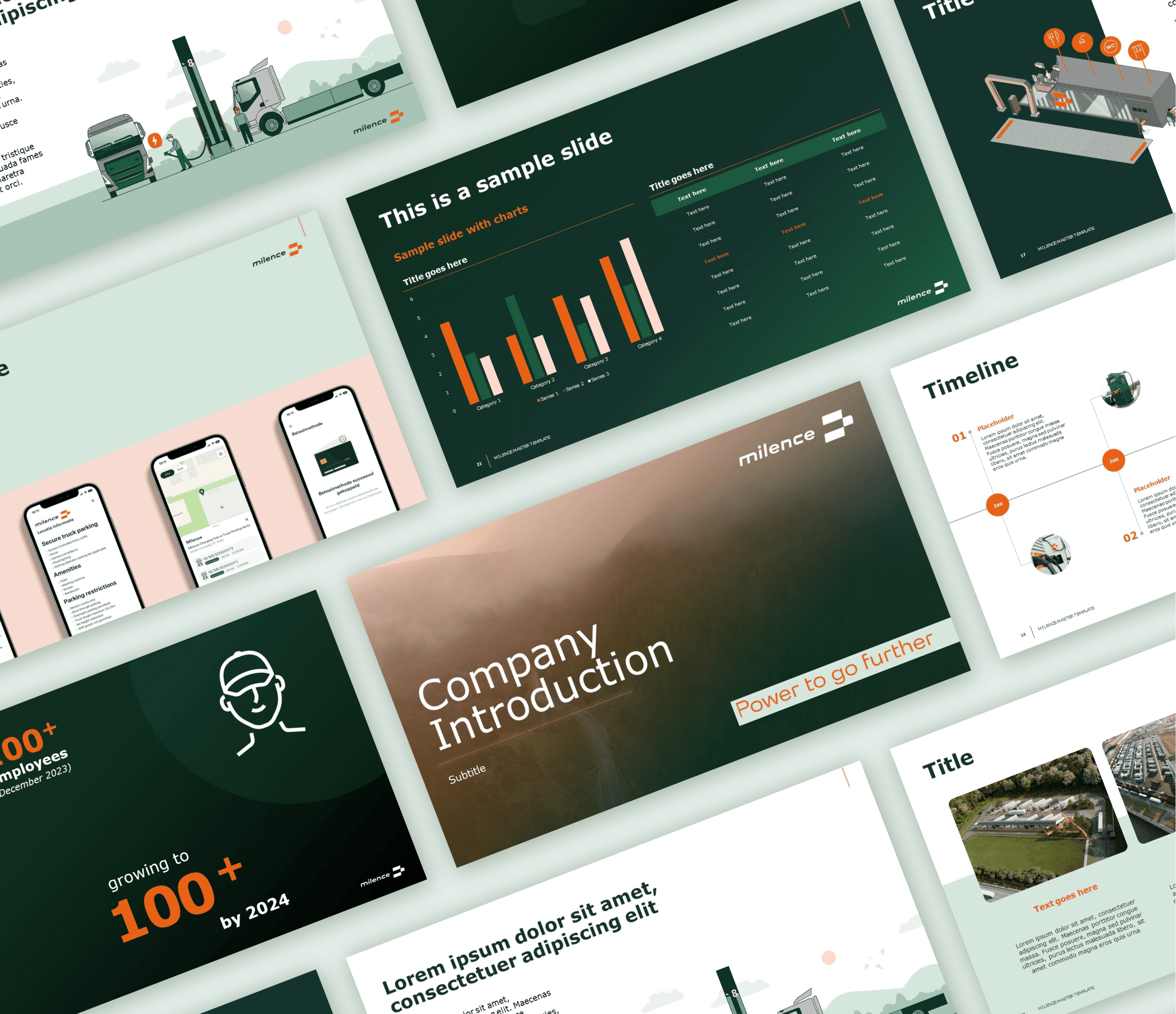
Storytelling & Animations
Milence
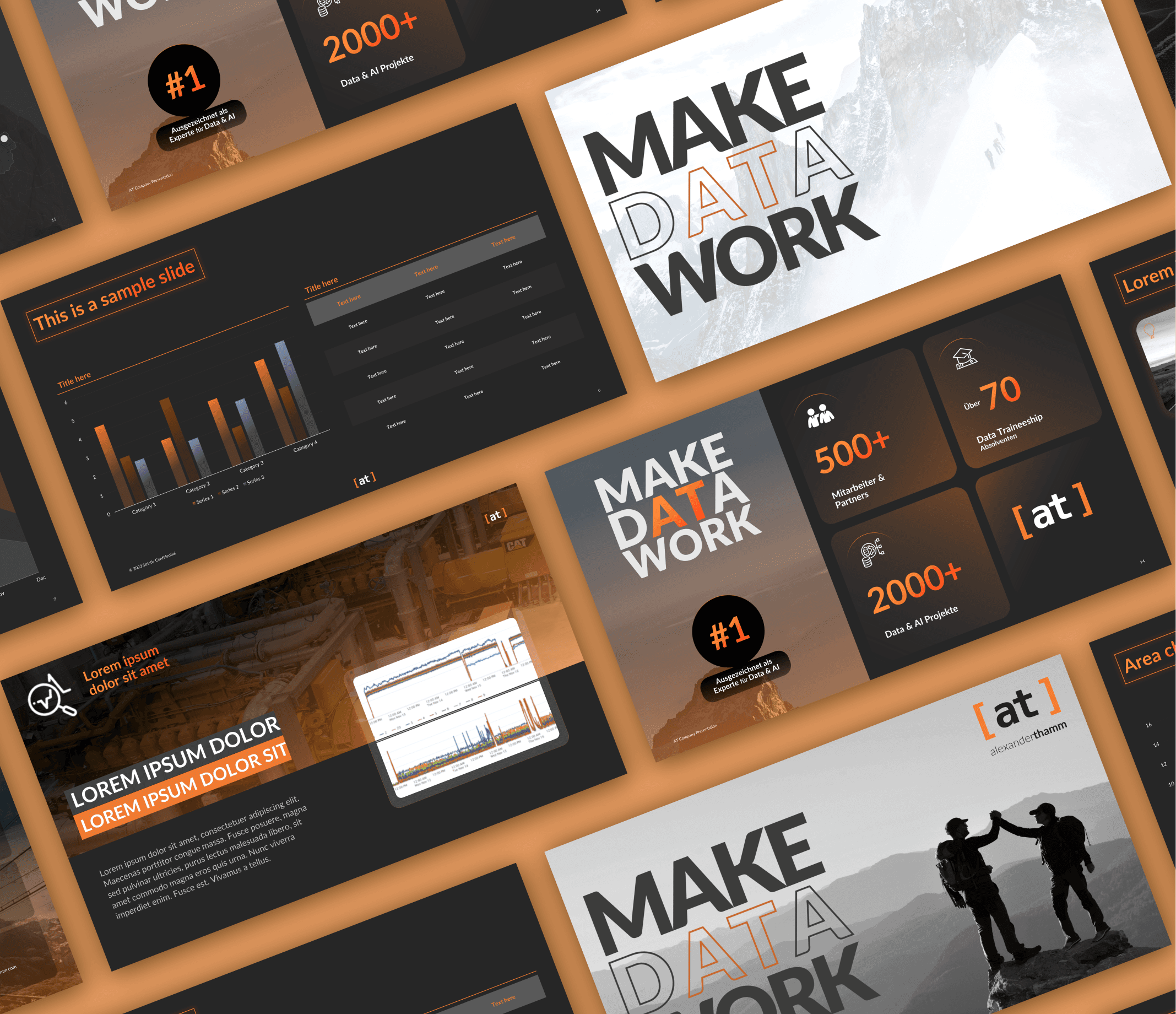
Master Template
Alexander Thamm
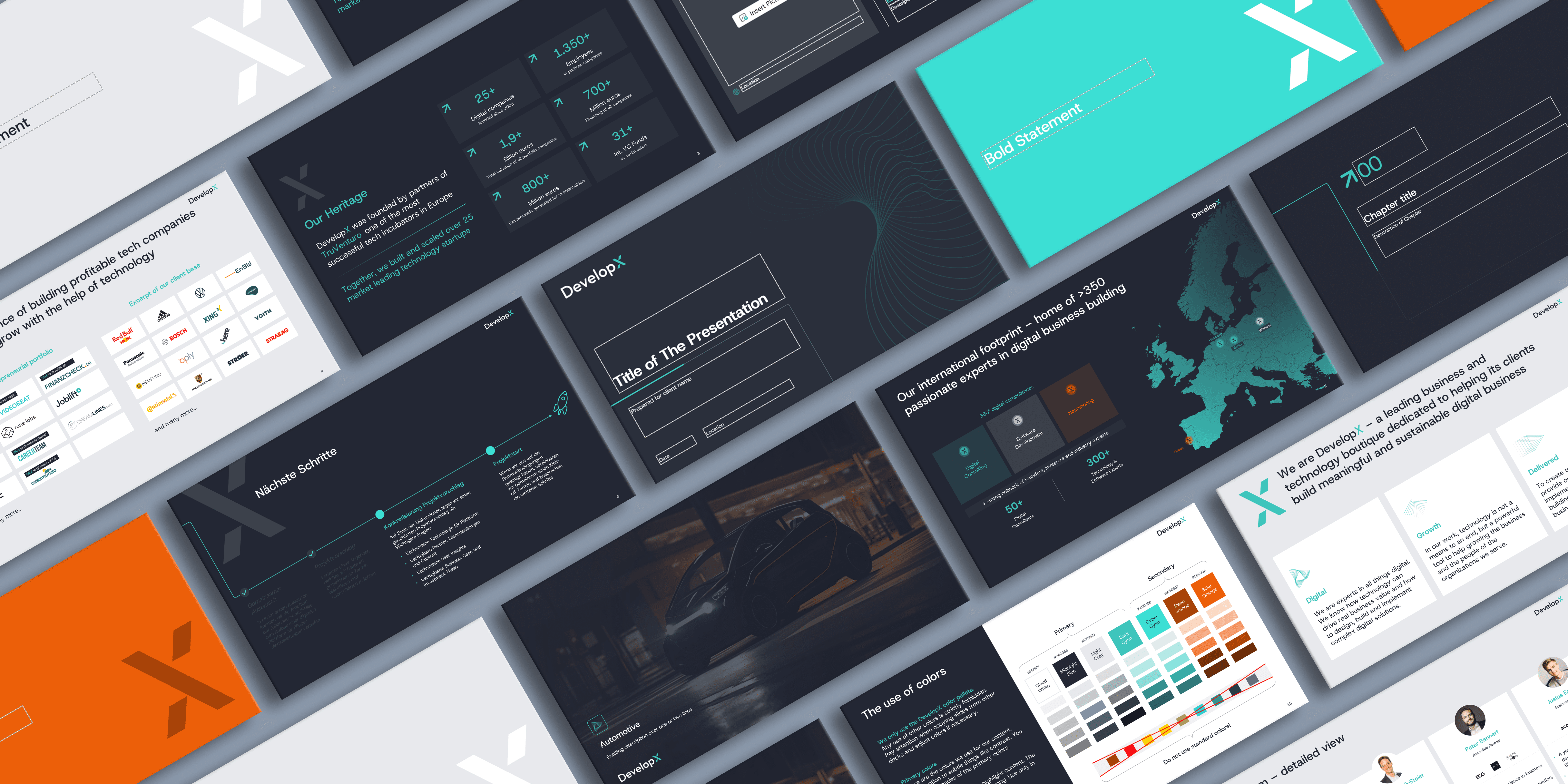
PowerPoint Master Template + Company Presentation
DevelopX

Master Template, Storytelling
Genioo

Investor Deck
Airtime
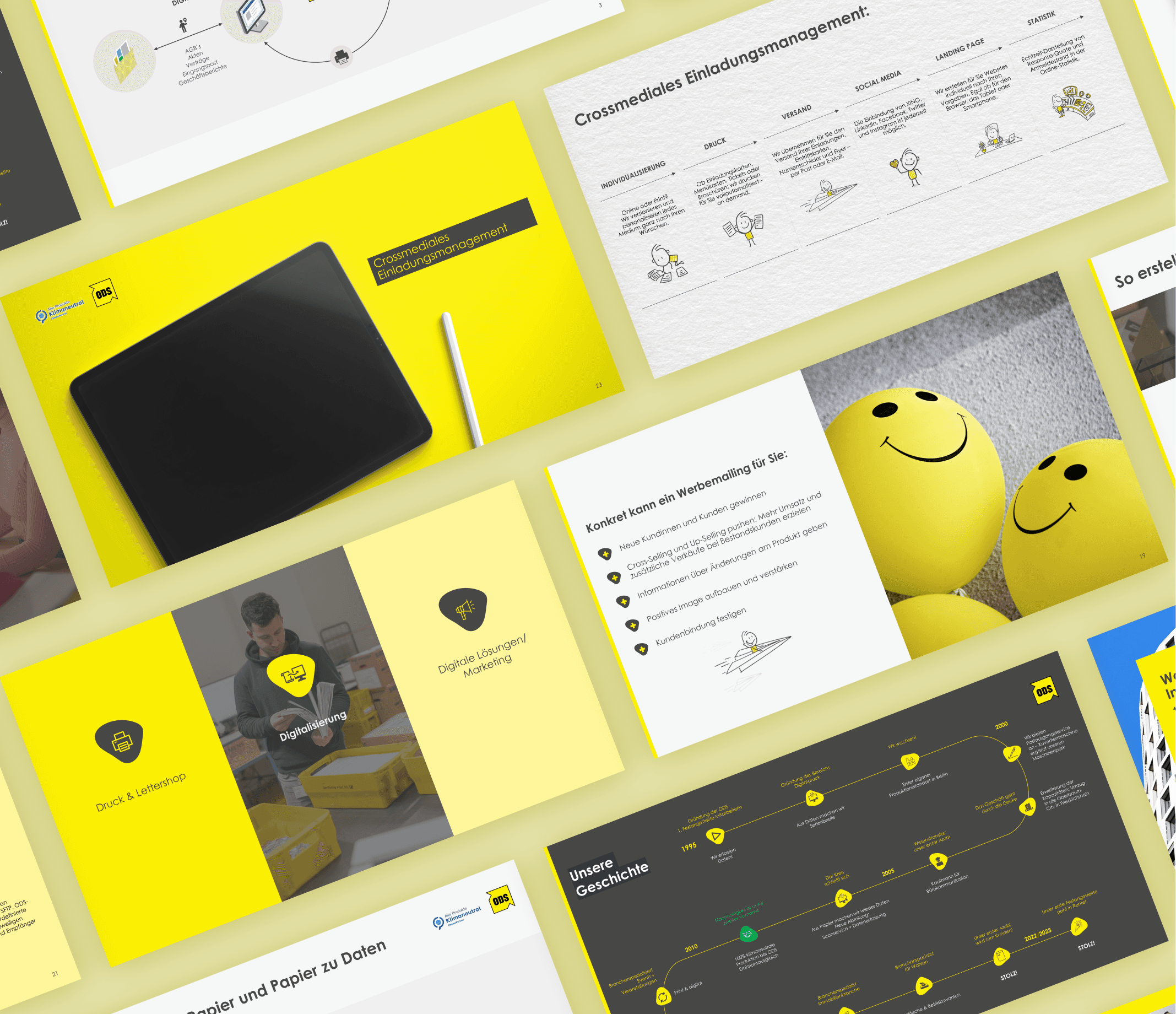
Storytelling & Playbook
Office-Data-Service
Ready to master the art of the presentation?
Dive into our other exciting articles at the links below:
👉 How can a presentation training help you
👉 How to create a sales pitch?
👉 The legendary Uber Pitch Deck
👉 How to build a modern playbook
👉 The Public Speaking Coach: Your Partner in Business Thinking
👉 Presentation Techniques: What's the Secret to a Compelling Presentation?
👉 Presentation on Presentations: A Presentation About Presenting
Pitch
👉 The Uber pitch deck
👉 The Airbnb pitch deck